IntroductionMany construction and landsc
IntroductionIn modern civil engineering

We used the landscape gabion boxes for o
Many construction and landscape projects fail not because of poor design concepts, but because the selected retaining solution cannot handle real environmental stress. Cracking walls, blocked drainage, and unstable slopes are still common problems in civil engineering.
Gabion mesh provides a practical alternative that solves these issues through a simple but highly effective principle: flexibility combined with permeability. Instead of resisting natural ground movement, gabion systems adapt to it, making them suitable for complex terrain and long-term outdoor exposure.
In real engineering applications, systems such as gabion wall, gabion basket, and modular gabion box structures are widely used because they reduce maintenance pressure while improving structural reliability.
Gabion mesh is a steel wire-based structural grid used to form stone-filled units. These units create gravity retaining systems that stabilize soil and control erosion without relying on rigid bonding materials like concrete.
The mesh works as a containment framework. Once filled with stone, it becomes a mass structure capable of resisting lateral pressure while still allowing water to flow freely through voids.
Two common engineering forms include rigid welded gabion systems and flexible twisted mesh systems. Each is selected based on terrain conditions and load requirements.
The general gabion system is a stone-filled mesh structure used for erosion control and slope protection. It is widely applied in riverbanks, coastal areas, and hillside reinforcement projects.
A gabion box is a modular rectangular unit designed for stacking and structural reinforcement. It is commonly used in retaining walls where height and load conditions vary.
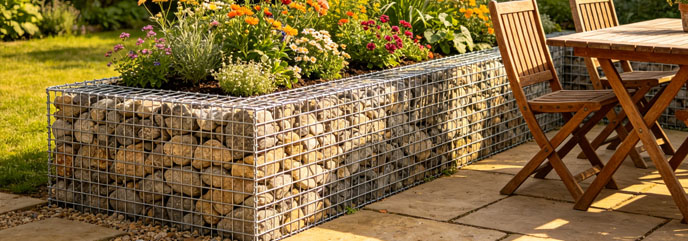
A gabion basket is typically a smaller or more flexible unit used in landscaping, drainage channels, and light retaining applications. It is often chosen for aesthetic or low-load environments.
PVC-coated gabion mesh offers strong protection against corrosion, especially in humid, coastal, or chemically exposed environments. The coating significantly extends service life.
PP-coated mesh provides lightweight protection and flexibility. It is suitable for temporary structures or environmentally sensitive installations where reduced material impact is required.
The effectiveness of gabion systems is based on three engineering behaviors: load distribution, hydraulic permeability, and structural adaptability.
When external pressure is applied, the stone infill redistributes force internally, reducing stress concentration. At the same time, water passes through the structure, preventing pressure buildup behind the wall.
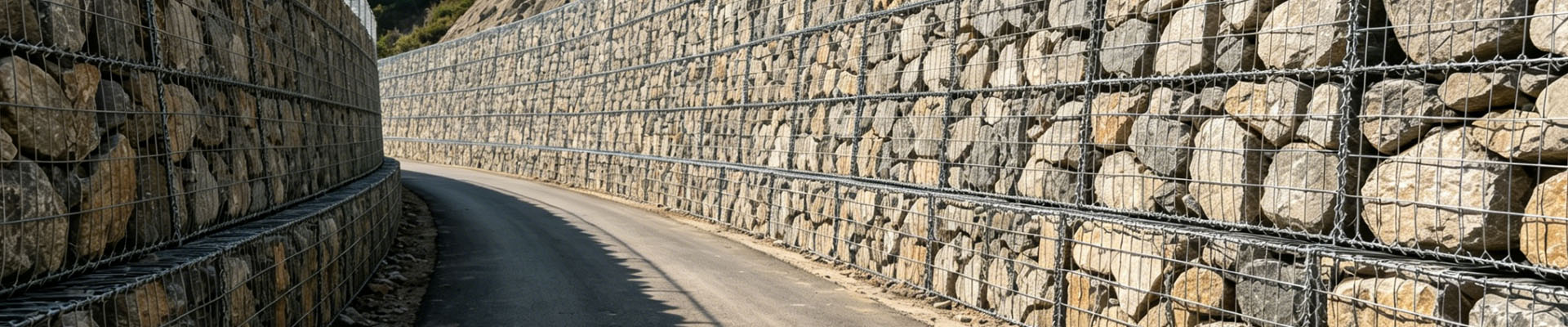
Compared with rigid retaining systems, welded gabion structures perform better in environments with soil settlement, flooding, or vibration, such as highways, rivers, and coastal zones.
Selection of gabion mesh should always be based on engineering conditions rather than appearance alone.
Correct selection directly impacts durability, safety, and maintenance cost over the lifecycle of the project.
Clogging occurs when fine particles block drainage paths within the stone fill. This reduces permeability and may increase hydraulic pressure over time.
Scaling refers to mineral or sediment buildup on exposed stone surfaces, often seen in water-contact gabion structures such as river protection walls.
Aging is the gradual degradation of wire coating and steel integrity due to long-term environmental exposure, particularly in harsh weather conditions.
Gabion structures are low maintenance, but basic inspections help extend service life significantly.
Case 1: Coastal Protection System
A coastal defense project used gabion wall systems to reduce wave erosion. The permeability of gabion mesh reduced wave impact pressure and stabilized shoreline geometry over time.
Case 2: Mountain Highway Stabilization
In a mountain road project, gabion baskets were used to reinforce steep embankments. The system adapted well to soil movement caused by rainfall and temperature variation.
Case 3: Public Park Redevelopment
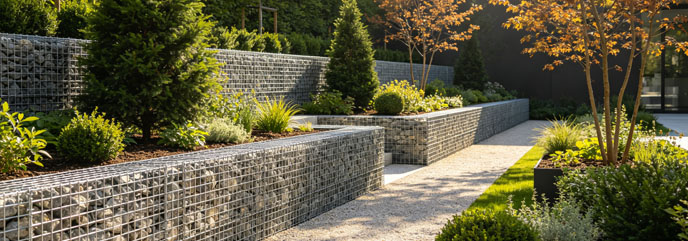
A city park project used gabion box structures for seating walls and landscape zoning. The system improved both functionality and visual integration with the natural environment.
Gabion mesh continues to be one of the most efficient solutions in modern infrastructure and landscape engineering. Its ability to combine structural stability with environmental adaptability makes it suitable for a wide range of applications.
From gabion wall systems to modular gabion basket and gabion box structures, the technology provides a long-term balance between engineering performance and natural integration.
Q1: Where is gabion mesh commonly used?
It is widely used in retaining walls, river protection, slope stabilization, and landscape construction.
Q2: Why is gabion preferred over concrete in some projects?
Because it offers better drainage, flexibility, and resistance to ground movement.
Q3: What affects gabion lifespan?
Wire coating type, environmental conditions, and installation quality are the main factors.
Q4: Can gabion be used in architectural design?
Yes, it is widely used in modern architecture for facades, seating, and decorative structures.
Q5: Is gabion suitable for flood areas?
Yes, its permeability makes it highly effective in flood-prone environments.
Industry updates and product information for international clients
IntroductionIn modern civil engineering and landscape construction, project failures often come from
IntroductionMany construction and landscape projects fail not because of poor design concepts, but b
Reach out to our team for product details, quotations, and project support
Chat via WhatsApp