IntroductionMany construction and landsc
IntroductionIn modern civil engineering

We used the landscape gabion boxes for o
In modern civil engineering and landscape construction, project failures often come from one simple issue: unstable soil and uncontrolled erosion. Concrete walls crack, rigid structures shift, and drainage problems slowly destroy retaining systems. This is where gabion mesh becomes a practical and long-lasting solution.
Whether used for a gabion wall, gabion basket, or modular gabion box, engineers rely on gabion systems because they are flexible, permeable, and naturally stable. Unlike rigid concrete, a properly designed gabion cage adapts to ground movement instead of resisting it, reducing structural failure risk.
As a structural engineer with over 10 years of field experience, I have seen gabion systems outperform traditional retaining solutions in riverside protection, slope stabilization, and landscape architecture projects worldwide.
Gabion mesh is a steel wire mesh system used to form modular cages filled with stones or rock fragments. These structures create gravity-based retaining systems that are both functional and environmentally friendly.
In engineering terms, gabion mesh acts as a confinement system. It holds the infill material in place while allowing water to pass through freely. This reduces hydrostatic pressure, which is one of the main causes of retaining wall failure.
There are two major structural types: welded gabion mesh and twisted hexagonal mesh. Welded systems provide rigid geometry, while hexagonal systems provide flexibility for uneven terrain.
The basic gabion system refers to wire mesh containers filled with stone. These are widely used in erosion control, riverbank protection, and slope reinforcement. Their strength comes from mass and interlocking stones rather than rigid bonding.
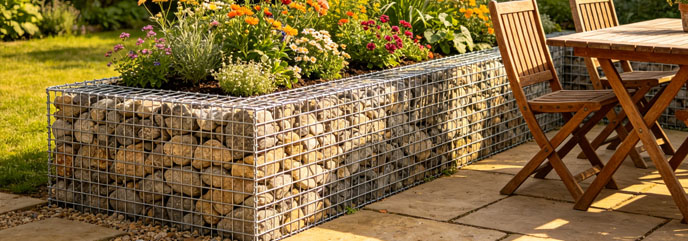
A gabion box is a rectangular modular unit made from gabion mesh panels. It is commonly used in retaining walls and structural landscaping. Engineers prefer gabion boxes because they can be stacked and combined for different wall heights.
A gabion basket is similar to a gabion box but often refers to smaller or more flexible units used in decorative landscaping and light engineering applications such as garden walls and channel protection.
PVC-coated gabion mesh provides enhanced corrosion resistance. The PVC layer protects steel wire from moisture, salt, and chemical exposure. It is widely used in coastal and high-humidity environments.
PP (polypropylene) coatings are used in lightweight or specialized applications. They offer good flexibility and environmental resistance, making them suitable for temporary structures or eco-focused projects.
The performance of gabion systems depends on three engineering principles: mass stability, permeability, and flexibility.
First, the stone-filled structure provides gravitational resistance. Second, the permeability of gabion mesh allows water to flow through instead of building pressure behind the wall. Third, flexibility ensures the structure adjusts to soil movement without cracking.
Compared with rigid concrete systems, welded gabion structures often show better long-term performance in unstable soil conditions. In flood-prone regions, gabion walls consistently outperform traditional masonry due to their drainage capability.
Choosing the correct gabion mesh requires understanding site conditions and project purpose.
Engineers should also consider mesh opening size, wire thickness, and corrosion protection level before selection.
Clogging occurs when soil or debris blocks drainage paths. Although gabion mesh is permeable, poor installation or fine soil migration can reduce efficiency.
Scaling refers to sediment buildup on stone surfaces. This is common in water-contact structures such as riverbank gabion walls.
Aging happens due to long-term exposure to weather conditions. Without proper coating, steel wire may corrode over time, reducing structural integrity.
Gabion systems require minimal maintenance, but periodic inspection improves lifespan.
Case 1: Riverbank Protection Project
In Southeast Asia, a gabion wall system was used to protect a riverbank prone to seasonal flooding. After installation of welded gabion cages filled with granite, erosion was significantly reduced and the structure remained stable through multiple flood cycles.
Case 2: Highway Slope Stabilization
A highway project used gabion baskets to stabilize steep slopes. Compared to concrete retaining walls, the gabion system reduced construction cost and improved drainage efficiency.
Case 3: Urban Landscape Design
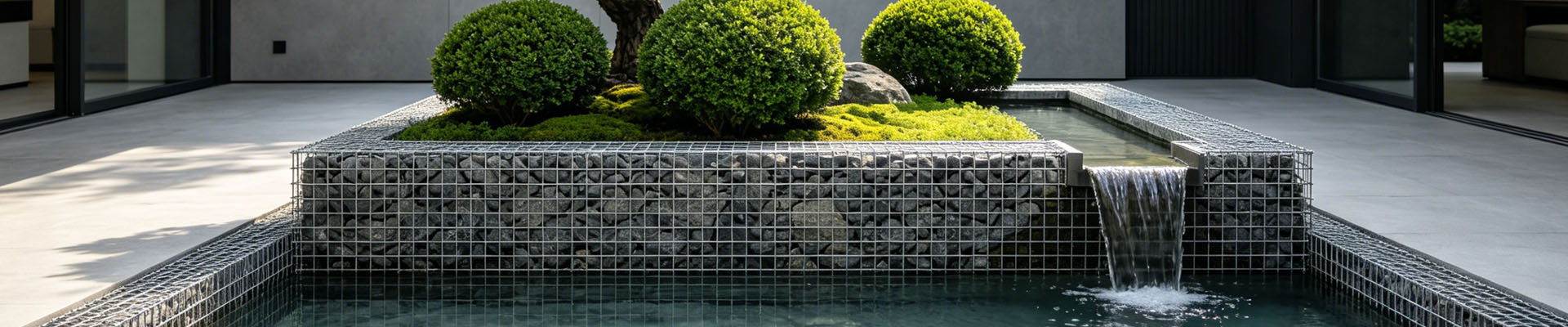
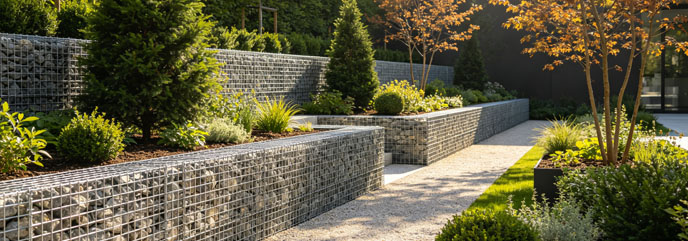
In a commercial city park, gabion boxes were used for seating walls and decorative features. The system provided both structural support and modern architectural aesthetics, integrating well with surrounding greenery.
Gabion mesh remains one of the most reliable and versatile solutions in modern civil engineering and landscape design. Whether used in a gabion wall, gabion basket, or modular gabion box system, its combination of strength, permeability, and flexibility makes it superior to many traditional retaining systems.
For engineers and contractors, selecting the right gabion mesh type is not just a material decision—it is a long-term performance strategy. With proper design and installation, gabion systems can deliver decades of stable and sustainable performance.
Q1: What is gabion mesh used for?
Gabion mesh is used for retaining walls, slope protection, riverbank stabilization, and landscape design structures.
Q2: Is gabion stronger than concrete?
Gabion is not stronger in compression, but it performs better in flexible ground conditions due to drainage and adaptability.
Q3: How long does gabion mesh last?
Depending on coating type, gabion mesh can last 20 to 50 years in outdoor environments.
Q4: Can gabion be used in landscaping?
Yes, gabion is widely used in gardens, seating walls, fences, and decorative landscape structures.
Q5: What stone is best for gabion filling?
Hard natural stones such as granite, basalt, or river rock are commonly used for durability and stability.
Industry updates and product information for international clients
IntroductionIn modern civil engineering and landscape construction, project failures often come from
IntroductionMany construction and landscape projects fail not because of poor design concepts, but b
Reach out to our team for product details, quotations, and project support
Chat via WhatsApp